Can you install EV chargers at my home?
As electric vehicles become more common across Ontario, many homeowners are asking the same question:
Can I install an EV charger at home?
In most cases, the answer is yes.
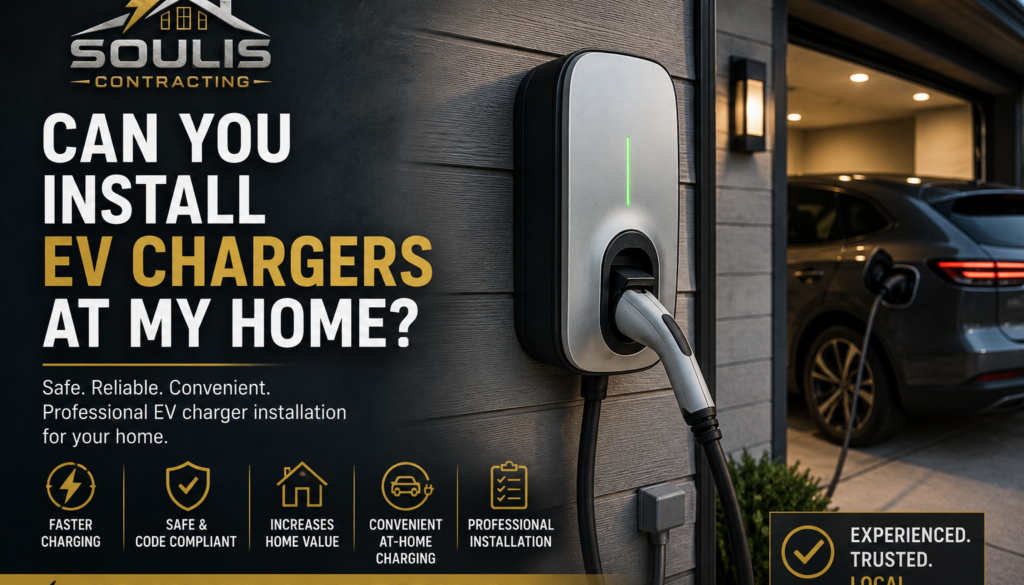
Whether you’ve just purchased your first electric vehicle or you’re planning ahead, installing a home EV charger makes charging faster, more convenient, and more reliable than relying on a standard household outlet.
Before installation begins, however, it’s important to make sure your home’s electrical system is ready.
Why Install a Home EV Charger?
Most electric vehicles come with a Level 1 charging cable that plugs into a standard 120-volt outlet.
While convenient, Level 1 charging can take many hours—or even more than a full day—to fully recharge a vehicle.
A professionally installed Level 2 EV charger uses a dedicated 240-volt circuit, dramatically reducing charging time and making everyday vehicle charging much more practical.
Benefits include:
- Faster charging
- Greater convenience
- Reliable overnight charging
- Increased home value
- Reduced dependence on public charging stations
Does My Home Have Enough Electrical Capacity?
Not every home is immediately ready for an EV charger.
Before installation, your electrician will evaluate your electrical system to determine whether your existing panel has enough capacity.
They will assess:
- Available breaker space
- Overall electrical load
- Existing panel capacity
- Service size
- Future electrical needs
Some homes require no upgrades at all, while others may benefit from a panel upgrade before installing an EV charger.
Will I Need a Dedicated Circuit?
Yes.
A Level 2 EV charger requires its own dedicated electrical circuit.
Dedicated circuits help ensure:
- Safe operation
- Proper breaker protection
- Reliable charging performance
- Compliance with electrical code
- Reduced risk of overloading existing circuits
This is one reason professional installation is so important.
Can an Older Home Support an EV Charger?
Often, yes.
Older homes can frequently accommodate an EV charger, but additional electrical upgrades may be required.
These might include:
- Electrical panel upgrades
- Additional breaker space
- Service upgrades
- New wiring
- New conduit installation
Every home is different, which is why an on-site assessment is the best way to determine what’s needed.
Where Can an EV Charger Be Installed?
Home EV chargers can often be installed in:
- Attached garages
- Detached garages
- Carports
- Driveways
- Exterior walls
- Workshops
Your electrician will recommend the best location based on your parking habits, electrical panel location, and ease of installation.
Should I Install More Than One Charger?
If your household owns—or plans to own—multiple electric vehicles, it may make sense to plan for future charging needs now.
During installation, your electrician can discuss options that allow for future expansion without needing to redo electrical work later.
Planning ahead often saves time and money.
Is Professional Installation Important?
Absolutely.
Installing an EV charger involves much more than mounting equipment on the wall.
Professional installation helps ensure:
- Proper wire sizing
- Safe breaker installation
- Correct electrical connections
- Code-compliant installation
- Reliable long-term performance
- Safe operation for your family and vehicle
A professionally installed charger also helps protect your investment in your vehicle.
EV Charger Installation in Caledon
Soulis Contracting provides professional EV charger installation for homeowners throughout Caledon and surrounding communities.
Whether you’re installing your first electric vehicle charger, upgrading your electrical panel, or planning for future expansion, Tyler will evaluate your home’s electrical system and recommend the solution that best fits your needs.
Every installation is completed with a focus on safety, quality workmanship, and dependable performance.
Frequently Asked Questions
Can any home have an EV charger installed?
Most homes can, although some older electrical systems may require upgrades before installation.
Do I need a dedicated breaker for an EV charger?
Yes. Level 2 EV chargers require a dedicated circuit designed specifically for the charger.
Will I need an electrical panel upgrade?
Not always. Many homes already have enough capacity, while others may need additional electrical service or a larger panel.
How long does an EV charger installation take?
Most residential installations can be completed within a day, although more complex projects involving panel upgrades or long wiring runs may take longer.
Is charging at home better than using public chargers?
For many homeowners, yes. Home charging is convenient, reliable, and allows your vehicle to recharge overnight so it’s ready each morning.