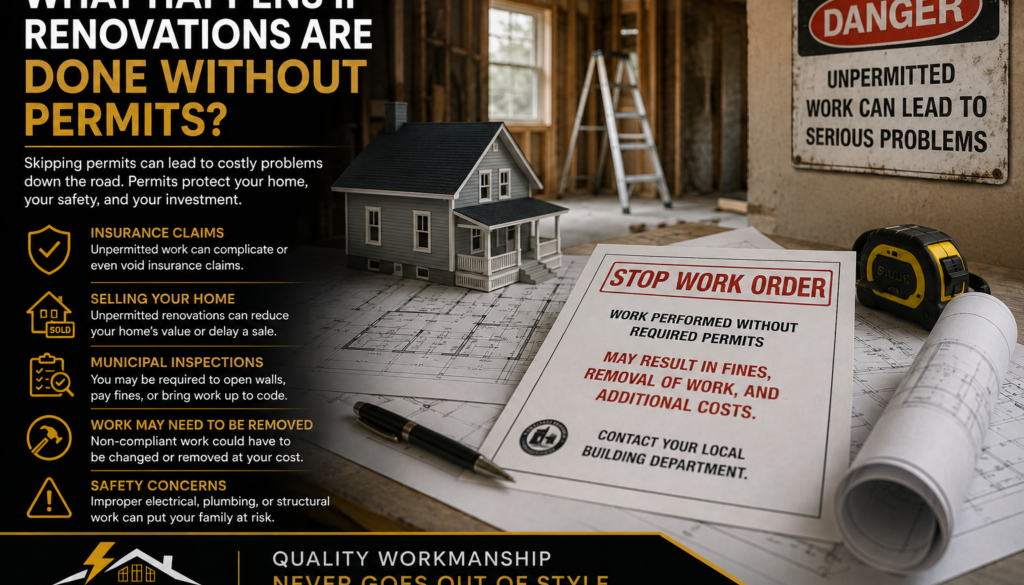
What Happens If Renovations Are Done Without Permits?
When planning a renovation, it’s tempting to focus on finishes, fixtures, and budgets.
Permits often feel like just another step in the process.
However, if work that requires permits is completed without them, the consequences may not become apparent until months—or even years—later.
Whether you’re renovating a basement, adding a bathroom, upgrading your electrical system, or building a deck, understanding the role permits play can help protect both your investment and your peace of mind.
A renovation isn’t just about improving how your home looks—it’s about protecting how it performs for years to come. Taking the time to do things properly today can help prevent costly surprises tomorrow.
Why Do Permits Exist?
Permits aren’t designed to slow down construction.
They’re intended to ensure certain types of work meet applicable building and safety requirements before they’re hidden behind drywall, flooring, insulation, or finishes.
They also create documentation showing the work was completed according to accepted standards.
For homeowners, that’s valuable protection.
Insurance May Become More Complicated
One reason permits matter is because renovations often become part of your home’s insured value.
If a future insurance claim involves work that should have been permitted but wasn’t, additional questions may arise during the claims process.
Every insurance policy is different, but having properly documented renovations can help provide confidence that work was completed correctly.
Selling Your Home Later
Many homeowners renovate with no intention of selling.
Life changes.
Years later, buyers may ask questions such as:
- Was the basement professionally finished?
- Was the electrical upgraded?
- Were permits obtained?
- Was the bathroom added properly?
Having documentation that work was completed correctly can make those conversations much easier.
It also provides reassurance for future buyers.
Municipal Inspections
If renovations require permits, inspections are typically part of the process.
These inspections help verify that:
- Structural work is completed correctly.
- Electrical systems meet safety requirements.
- Plumbing installations comply with applicable standards.
- Safety measures have been followed.
Without inspections, hidden issues may remain undetected until much later.
Could Work Need To Be Changed?
Every situation is different.
In some cases, municipalities may require unpermitted work to be inspected before future renovations continue.
Occasionally, finishes may need to be opened so inspectors can verify what was completed behind the walls.
If deficiencies are found, repairs or modifications may be required before approval can be granted.
Planning properly from the beginning often avoids these situations altogether.
Safety Is Always the Priority
Building codes and permit requirements aren’t simply administrative rules.
They’re based on decades of experience and lessons learned about how buildings perform over time.
Proper inspections help identify issues involving:
- Structural framing
- Electrical wiring
- Plumbing
- Fire separation
- Ventilation
- Moisture control
These are all systems homeowners depend on every day without ever seeing them.
Electrical Work Requires Special Attention
Electrical work deserves particular care because it directly affects the safety of your family and your home.
Projects such as:
- Panel upgrades
- Basement wiring
- New circuits
- EV charger installation
- Garage electrical
- Hot tub wiring
may require permits and inspections through the Electrical Safety Authority (ESA).
These inspections help confirm the installation has been completed safely and correctly.
Peace of Mind Has Value
Many homeowners say they sleep better knowing their renovation was completed properly.
Permits provide confidence that:
- Qualified work has been inspected.
- Applicable requirements have been met.
- Documentation exists for future reference.
- Your investment has been protected.
That’s peace of mind that lasts long after construction is finished.
Planning Ahead Saves Time
Obtaining permits before construction begins is almost always simpler than trying to address permit requirements after work has already been completed.
A professional contractor will discuss permit requirements during the planning stage, helping avoid delays, confusion, and unnecessary expense later.
Renovating With Confidence
At Soulis Contracting, we believe quality workmanship begins long before construction starts.
When permits are required, we’ll explain why they’re needed, help guide you through the process, and ensure your project is completed with the same attention to detail we’d expect in our own homes.
Because protecting your investment is just as important as completing a beautiful renovation.
Frequently Asked Questions
Can I sell my home if renovations weren’t permitted?
Yes, but buyers or their representatives may ask questions about significant renovations, particularly involving structural, electrical, or plumbing work.
Do all renovations require permits?
No. Cosmetic improvements such as painting, flooring, cabinets, and trim generally do not require permits. Structural, electrical, plumbing, and major renovations often do.
Can electrical work require permits?
Yes. Many electrical projects require permits and inspections to help ensure they meet Ontario’s electrical safety requirements.
Can permits help with insurance?
While every insurance policy is different, properly documented renovations can help demonstrate that work was completed according to applicable requirements.
Is getting permits worth it?
For projects that require them, permits help protect your home’s safety, future resale value, and provide peace of mind that the work has been properly inspected.
Internal Linking Opportunities
This article naturally links to:
- Do I Really Need Permits for My Renovation?
- How Do I Choose the Right Contractor for My Home Renovation?
- Why Is One Quote So Much Cheaper Than Another?
- Do I Need a Licensed Electrician in Ontario?
- Can You Help With Electrical Renovations?
- What Electrical Services Do You Provide?
Brand Philosophy
I’d end this article with a statement that reinforces everything Tyler stands for:
A renovation isn’t just about improving how your home looks—it’s about protecting how it performs for years to come. Taking the time to do things properly today can help prevent costly surprises tomorrow.
It complements your homepage message, “Quality Workmanship Never Goes Out of Style,” and reinforces that Soulis Contracting values doing the job correctly, safely, and professionally—not simply completing it quickly.