
How Do I Choose the Right Contractor for My Home Renovation?
Hiring a contractor is one of the biggest decisions you’ll make during a home renovation. Whether you’re updating your kitchen, finishing a basement, building a deck, or planning a complete home remodel, the quality of the contractor you choose will directly affect the quality of the finished project.
Unfortunately, many homeowners have learned this lesson the hard way.
Over the past several years, the renovation industry experienced unprecedented demand. Long wait times, rising material costs, and labour shortages created opportunities for many new contractors to enter the market. While many were skilled and professional, others lacked the experience, qualifications, or accountability needed to complete projects properly.
The result was unfinished renovations, poor workmanship, unexpected costs, and homeowners left paying twice—once for the original work and again to have it corrected.
Choosing the right contractor isn’t about finding the lowest quote. It’s about finding someone you can trust to protect one of your biggest investments: your home.
Look Beyond the Price
Everyone has a budget, and it’s natural to compare quotes.
However, the cheapest quote isn’t always the best value.
If one estimate is significantly lower than the others, ask why.
Lower pricing may reflect:
- Lower-quality materials
- Less experience
- Missing items in the quote
- No insurance
- No warranty
- Little or no project management
A professional contractor should provide a detailed estimate explaining exactly what is included.
When you understand what’s being provided, comparing quotes becomes much easier.
Experience Matters
Every renovation presents unique challenges.
Older homes, unexpected structural issues, electrical upgrades, plumbing changes, and building code requirements all require experience.
Ask your contractor:
- How long have you been completing projects like mine?
- Have you completed similar renovations?
- Can you explain how you’ll approach this project?
Experience often means fewer surprises and better planning.
Make Sure They’re Properly Insured
Insurance protects both you and the contractor.
Ask whether they carry:
- Commercial liability insurance
- Workers’ compensation (WSIB where applicable)
Without proper coverage, homeowners may face unnecessary risk if something goes wrong during construction.
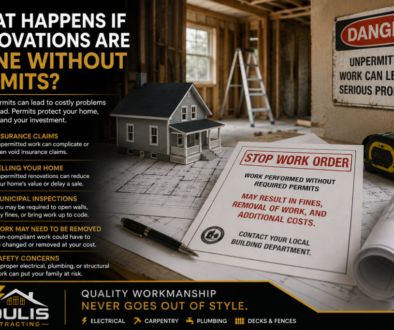
Ask About Permits
Many homeowners aren’t sure when permits are required.
A professional contractor will explain:
- Whether permits are needed
- Who obtains them
- What inspections will occur
- Why permits protect the homeowner
Permits aren’t simply paperwork—they help ensure work is completed safely and according to applicable building and electrical requirements.
Everything Should Be in Writing
Verbal agreements often lead to misunderstandings.
Before work begins, you should receive a written estimate outlining:
- Scope of work
- Materials
- Timeline
- Payment schedule
- Responsibilities
- Any exclusions
Clear expectations benefit everyone involved.
Communication Is Just as Important as Craftsmanship
Good contractors don’t disappear after receiving a deposit.
They communicate.
You should know:
- When work will begin
- What happens next
- If schedules change
- If unexpected issues arise
- How decisions will be made
Open communication reduces stress throughout the project.
Project Management Makes a Difference
Many renovations involve more than one trade.
Electrical work, framing, plumbing, drywall, painting, flooring, and finish carpentry all need to happen in the correct order.
An experienced contractor coordinates these trades, helping keep the project organized and moving forward.
Having one point of contact also makes communication much easier.
Ask About Warranty
Quality contractors stand behind their work.
Before hiring anyone, ask:
- What workmanship warranty is provided?
- How are warranty issues handled?
- Will I receive documentation?
A warranty demonstrates confidence in the quality of the finished project.
Trust Your Instincts
Credentials matter—but so does professionalism.
Ask yourself:
- Do they answer questions clearly?
- Do they return phone calls?
- Do they arrive on time?
- Are they respectful?
- Do they seem organized?
- Do they explain things without pressure?
If something doesn’t feel right before the project begins, it probably won’t improve once construction starts.
Why Homeowners Choose Soulis Contracting
At Soulis Contracting, we believe every renovation begins with trust.
We understand that inviting someone into your home is a significant decision, and we don’t take that responsibility lightly.
Whether we’re completing electrical work, building a deck, renovating a basement, or coordinating an entire home improvement project, our focus is always the same:
- Honest communication
- Clear estimates
- Quality workmanship
- Careful planning
- Professional project coordination
- Work completed to a high standard
Our goal isn’t simply to finish a project—it’s to build something you’ll be proud of for years to come.
Frequently Asked Questions
Should I always choose the lowest quote?
Not necessarily. Consider the contractor’s experience, insurance, communication, materials, warranty, and the completeness of the estimate—not just the price.
Why are permits important?
Permits help ensure work meets applicable building and safety requirements. They can also protect homeowners when selling their home or making insurance claims.
Should every renovation have a written contract?
Yes. A written estimate or contract helps clearly define the work, costs, timeline, and expectations for both the homeowner and the contractor.
Why does communication matter so much?
Good communication keeps projects organized, reduces misunderstandings, and ensures homeowners know what to expect throughout the renovation.
Can one contractor manage multiple trades?
Yes. Many homeowners prefer working with one contractor who coordinates electricians, plumbers, carpenters, and other trades to simplify the renovation process.