Why Do My Breakers Keep Tripping? Common Causes & Solutions
If you’ve ever had to walk to your electrical panel and reset the same breaker more than once, you’re not alone.
Circuit breakers are designed to protect your home and family by shutting off power when they detect an unsafe condition. While an occasional trip isn’t unusual, breakers that repeatedly trip are often a sign that something needs attention.
Ignoring the problem or continually resetting the breaker without finding the cause can increase the risk of electrical damage or even fire.
What Does a Circuit Breaker Do?
A circuit breaker acts as a safety device for your electrical system.
When it detects:
- Too much electrical demand
- A short circuit
- A ground fault
- A damaged electrical component
it automatically shuts off power to prevent wiring from overheating.
In other words, a tripping breaker is usually doing exactly what it was designed to do.
Common Reasons Breakers Keep Tripping
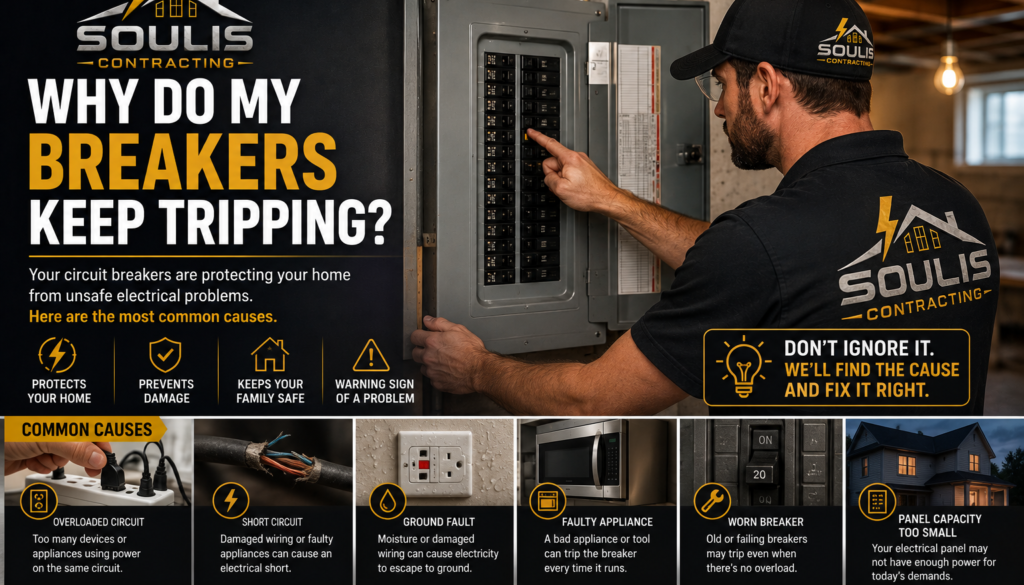
1. An Overloaded Circuit
This is the most common cause.
Modern homes use far more electricity than homes built 30 or 40 years ago.
If several high-powered appliances are running on the same circuit, the breaker may trip to prevent overheating.
Examples include:
- Microwaves
- Portable heaters
- Air fryers
- Coffee makers
- Toasters
- Hair dryers
- Vacuum cleaners
Using several of these at once may overload a circuit.
2. Too Many Devices on One Circuit
Even if each device uses only a small amount of electricity, the combined load can exceed what the breaker is designed to handle.
Adding additional receptacles over the years without upgrading the electrical system can contribute to this problem.
3. A Short Circuit
Short circuits occur when electrical current follows an unintended path.
Signs may include:
- Breakers tripping instantly
- Burning smells
- Sparks
- Damaged outlets
- Melted plugs
Short circuits should always be investigated by an experienced electrician.
4. A Ground Fault
Ground faults are similar to short circuits but occur when electricity escapes to a grounded surface.
These are especially common in:
- Kitchens
- Bathrooms
- Garages
- Basements
- Outdoor receptacles
GFCI outlets are designed to protect against these types of faults.
5. A Faulty Appliance
Sometimes the breaker isn’t the problem.
A damaged appliance may trip the breaker every time it’s plugged in.
If you notice the breaker trips only when using one specific appliance, discontinue using it until the problem has been identified.
6. A Worn or Failing Breaker
Like any mechanical device, circuit breakers can wear out over time.
An older breaker may begin tripping even when the electrical load is normal.
An electrician can inspect the panel to determine whether the breaker should be replaced.
7. Your Electrical Panel Is Too Small
Many older homes simply weren’t designed for today’s electrical demands.
If you’ve recently added:
- An EV charger
- Air conditioning
- A hot tub
- A finished basement
- A workshop
- New kitchen appliances
your existing electrical panel may no longer have enough capacity.
Should I Keep Resetting the Breaker?
No.
If the breaker immediately trips again after being reset, there’s usually an underlying issue.
Repeatedly forcing it back on won’t solve the problem and may make the situation more dangerous.
Instead, turn off or unplug anything connected to that circuit and arrange for the system to be inspected.
Can I Prevent Breakers From Tripping?
In many cases, yes.
Helpful tips include:
- Avoid plugging multiple high-powered appliances into the same circuit.
- Replace damaged extension cords.
- Don’t overload power bars.
- Have older electrical systems inspected.
- Install dedicated circuits where needed.
- Upgrade your electrical panel if your home’s electrical demand has increased.
Preventative maintenance can reduce unexpected electrical problems and improve the overall reliability of your system.
When Should I Call an Electrician?
You should contact an electrician if:
- The same breaker trips repeatedly.
- A breaker won’t reset.
- You notice burning smells.
- Outlets feel warm.
- Lights flicker throughout the house.
- You hear buzzing from your electrical panel.
- Breakers trip after a renovation or installing new appliances.
These symptoms may indicate a larger electrical issue that requires professional diagnosis.
Breaker Troubleshooting in Caledon
Soulis Contracting provides professional electrical troubleshooting and repair services for homeowners and businesses throughout Caledon and surrounding communities.
Whether your breakers keep tripping, your lights are flickering, or you’re concerned your electrical panel can’t keep up with today’s electrical demands, Tyler can identify the cause and recommend the safest, most effective solution.
Our goal is to restore reliable power while ensuring your electrical system continues to protect your home and family.
Frequently Asked Questions
Is it normal for a breaker to trip occasionally?
Yes. Circuit breakers are designed to trip when they detect unsafe electrical conditions. An occasional trip may simply indicate an overloaded circuit.
Can a bad breaker keep tripping?
Yes. Although less common than overloaded circuits, breakers can wear out over time and may need replacement.
Should I replace a breaker myself?
Electrical panels contain live electrical components that can be dangerous. Breaker replacement should be completed by an experienced electrician.
Can an overloaded circuit damage my home?
If left unresolved, overloaded circuits can overheat wiring and create a potential fire hazard. Circuit breakers help prevent this by shutting off power before damage occurs.
Could I need an electrical panel upgrade?
Possibly. If your home has grown to include more appliances, an EV charger, a hot tub, or a finished basement, your electrical system may need additional capacity.